Health and Safety Policy for House Clearance Sanderstead
 Purpose: This policy sets out the health and safety framework for all staff, contractors and visitors involved in house clearance and rubbish removal activities in our service area. It explains responsibilities, risk control measures, training and compliance expectations for every person engaged in house clearance services. The policy supports safe, legal and environmentally responsible waste clearance operations and ensures that safety is prioritised during every stage of a clearance job.
Scope: The policy applies to all aspects of house clearances, waste removal and related site works undertaken by the rubbish company and its authorised agents. It extends to: on-site handling of domestic items, bulky waste removal, segregation for recycling, hazardous materials management and vehicle loading/unloading operations. The approach is designed to be proportionate and consistent across our service area while meeting applicable health and environmental obligations.
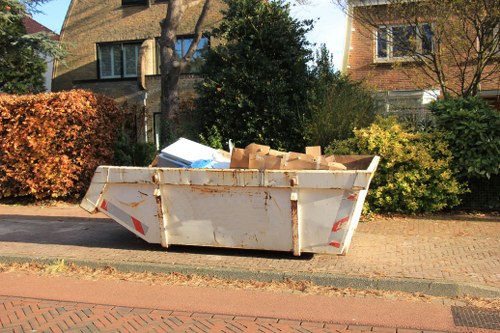 Policy Statement: We are committed to preventing injury and ill health and to minimising environmental impact during every waste clearance. Risk assessments will be carried out for all operations, and suitable controls implemented. All staff will be informed of hazards, provided with necessary PPE and trained in safe manual handling, safe use of equipment and incident reporting. Compliance with relevant waste and health legislation is a core requirement of our service delivery.
Roles, Responsibilities and Training
Management Responsibilities: Managers must ensure that safe systems of work are established, risk assessments are current and that vehicles, lifting equipment and tools are maintained. Supervision is provided for new staff and contractors. Managers are responsible for ensuring that staff are competent for tasks assigned and that records of training, licences and medical clearances are retained.
 Employee and Contractor Duties: Employees and sub-contractors must follow safe procedures, wear issued PPE, report hazards and immediately stop any work they believe to be unsafe. All operatives must demonstrate competency in house clearance tasks and refuse to undertake activities beyond their training. The policy includes an obligation to cooperate in all investigations and to participate in refresher courses.
Essential training topics include manual handling, hazardous materials awareness (including asbestos and sharps), vehicle loading safety, use of mechanical lifting aids and basic first aid. A programme of regular drills and toolbox talks reinforces safe practice during routine rubbish removal and bulky waste clearances.
Risk Management, Equipment and Waste Handling
The company uses a risk-based approach to control hazards associated with house clearances and waste clearance work. Typical controls include pre-job surveys, segregation of recyclable materials, secure containment of hazardous items, clear pedestrian exclusion zones and use of mechanical aids for heavy items. Operational checks of vans and clearance equipment are carried out before each shift.
Safe Work Procedures: Written standard operating procedures cover common tasks. Key elements include:
- Pre-job risk assessment and site briefing
- Use of PPE and mechanical aids for lifting
- Safe storage and transport of waste
- Segregation and labelling of hazardous materials
- Emergency arrangements and incident reporting
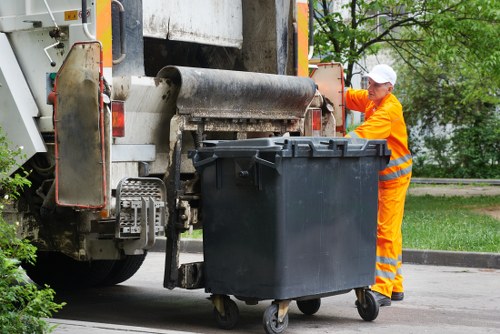 Health and First Aid: First aid kits are provided in all operational vehicles and at designated locations. Trained first-aiders are available across teams to respond to incidents. All injuries and near-misses must be reported and recorded, with follow-up actions implemented to reduce recurrence. Occupational health support is available where required.
 Monitoring, Audit and Continuous Improvement: The organisation monitors performance through site inspections, audits and review of incident data. Audits verify that waste is handled in accordance with regulatory requirements and internal procedures. Findings are used to improve training, revise risk assessments and update standard operating procedures. Performance metrics include incident rates, compliance checks and audit outcomes.
Environmental and Legal Compliance: Waste disposal and recycling are carried out through approved outlets and downstream processors to ensure legal compliance and environmental protection. Any discovery of contamination, controlled waste or suspected hazardous materials triggers the appropriate escalation and specialist disposal route in line with environmental regulations for rubbish companies and house clearance specialists.
Review and Policy Availability: This health and safety policy is reviewed at least annually or after significant changes to operations, legislation or following a serious incident. The policy is available to staff and authorised stakeholders. It forms part of the company’s commitment to delivering safe and reliable house clearance services across its service area while protecting people, property and the environment.